The process of professional painters is a thrilling process of updating the look of your house, however, preparation and safety planning is as vital as the choice of colors. Painting work entails the use of ladders, tools, chemicals and disruptions of temporary workspace that may lead to accidents and injuries unless effectively handled. Safety First: What Homeowners Should Know Before Your Crew Begins Painting is an understanding that is used to guarantee a smooth project and also safeguard your property and keep everyone safe in the process.
Even the slightest preparation ahead of the arrival of the crew will avoid accidents, delays and unforeseen damages.
The importance of safety preparation prior to the commencement of the painting process.
Painting projects have impacts on several aspects in your home environment. During the utilization of equipment and coatings that need to be handled in high regard, workers might be climbing ceilings, exterior walls, or tight spaces on the inside.
Proper preparation helps:
- prevent injuries
- guarantee furniture and belongings.
- avoid paint contamination
- reduce project delays
- enhance relationship with contractors.
It is good to follow an effective painting safety checklist to make the workplace prepared in advance.
Clear and prepare work areas
Precede the arrival of painters by removing the obstacles that can hinder free movement.
Homeowners should:
- set aside furniture at the walls.
- clear all decorations on the walls and delicate items.
- obvious paths and access points.
- secure loose rugs or cables
- offer sufficient working room.
An organized space eliminates the risk of trip and enhances work efficiency.
Secure valuables and valuables.
Even the professional crews operate with materials which are liable to accidentally splash or produce dust.
Protect items such as:
- electronics
- artwork and mirrors
- decorative accessories
- important documents
- small appliances
Seal rooms or covered storage rooms with sensitive items.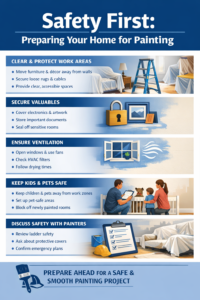
Learn paint and chemical safety.
The new paints are non-toxic as compared to the old recipes, yet they have chemicals which should be ventilated.
Important precautions:
- open windows when not in use.
- verify that ventilating fans are functioning correctly.
- do not remain long in newly painted rooms.
- adhere to drying-time guidelines.
This is because good airflow is an essential element of a painting safety checklist.
Plan for children and pets
Some painting conditions could involve ladders, tools, and wet surfaces.
Safety tips:
- protect children against working areas.
- designate pet-safe areas
- seal off newly-painted rooms.
- warn the painters of pets.
Restricting access will stop accidents and damage to paint.
Talk about the safety procedures with the painting crew.
Effective communication enhances safety measures.
Ask contractors about:
- insurance coverage
- ladder safety practices
- protective floor coverings
- cleanup procedures
- emergency contact plans
The knowledge of expectations is under the Safety First: What Homeowners Should Know Before Your Crew Starts Painting.
Make sure that there is airflow and ventilation.
Ventilation secures the workers and the people in their homes against fumes.
Recommended steps:
- open windows where possible
- modify HVAC control, where recommended.
- take away air filters when needed.
- must have time to dry out and reuse rooms.
Effective air circulation enhances the quality of drying as well as the indoor comfort.
Ensure areas of exterior painting are secure.
Projects on the outside need extra precautionary measures.
Prepare by:
- transporting moving vehicles off the work zones.
- trimming plants near walls
- securing outdoor furniture
- closing windows and doors
- notifying neighbors where there would be need.
Outdoor preparation eliminates accidental overspray and damage.
Pre-painting safety checklist table
| Preparation Step | Purpose |
| Clear furniture | Prevent accidents |
| Cover valuables | Avoid damage |
| Improve ventilation | Reduce fumes |
| Restrict access | Protect children & pets |
| Confirm contractor safety | Ensure compliance |
Test electrical and wall testing.
Artists frequently have their work close to outlets and fixtures.
Before work begins:
- report loose outlets or switches.
- detect the damaged drywalls.
- point out moisture problems
- mark sensitive walls.
Timely communication eliminates time wastage and safety issues.
Professional Painting Services by Streamline Paint
When it comes to high‑quality, reliable painting solutions, Streamline Paint is a trusted choice for homeowners and businesses alike. With a commitment to exceptional craftsmanship and attention to detail, Streamline Paint delivers stunning results that transform spaces and elevate property value. Whether you’re updating a room, refreshing your exterior, or planning a full‑scale paint project, Streamline Paint’s team of experts ensures a smooth, efficient process from start to finish. Discover how Streamline Paint can enhance your next project by visiting StreamlinePaint your trusted partner for professional painting services.
Know drying and curing time.
New paint requires time to dry.
Homeowners should:
- Do not touch walls too early.
- wait until the decor is reinstalled.
- adhere to the directions given by the crew.
- keep air moving through the process of curing.
Patience is a way of attaining professional outcomes.
Get ready to clean up and check up on project.
A secure project is one that is well cleaned up.
Confirm:
- tools are removed safely
- paint containers are sealed
- floors are cleaned
- Paint that is left over is marked in case of touch-up.
Quality and Safety standards are checked in during final inspection.
Homeowner pitfalls before the painting projects.
- abandoning weak decorations in workstations.
- allowing pets near painters
- ignoring ventilation needs
- not discussing safety expectations.
- painting before it is wet
.
The prevention of such errors helps to have a safer experience.
Benefits of proper preparation
| Benefit | Result |
| Safer workspace | Reduced accidents |
| Faster completion | Fewer interruptions |
| Better paint finish | Cleaner surfaces |
| Less stress | Smooth project flow |
Preparation directly improves project success.
Final thought
A successful painting project is one that starts way before the very brush touches the wall. Homeowners can make the work environment within their homes safer and more effective by planning your home, learning more about safety protocols and talking to your painting crew in a way that allows both to be clearly communicated with. Proactive measures safeguard your premises, help in achieving professional outcomes and make the whole process a smooth sailing affair.