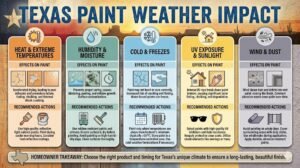
How Weather Conditions Affect Your Paint Job in Texas
Painting a house in Texas is not something that yields easily since there are extreme weather conditions in the state. Whether it is the blazing heat in summer or a rainy winter, knowing the effects of paint weather in Texas is essential to the quality of duration and appearance of the painting produced. Lack of proper timing or negligence to weather conditions may result in peeling, blistering or poor coverage.
Homeowners can identify the environmental factors that affect the performance of their paints, and therefore, properly plan their painting projects and make them durable.
High Summer Temperatures
It can be more than 100 deg F and this has an impact on both latex and oil based paints in Texas summers. Painting at high temperatures causes the paint to dry very fast resulting in:
Lumpiness in the skin and brush strokes.
Less adhesive to surfaces.
Fissure cracking or fissure flaking.
Hint: It is better to paint in early mornings or at late afternoons, when it is not sunny so that the paint does not dry in one spot.
Humidity and Moisture
Another aspect that is important is humidity, especially in eastern Texas. Excess moisture can:
Reduce drying period, paints are left sticky.
Favor blistering because stagnant moisture is blown up.
Foster mold or mildew at the testimony of the paint layer.
Hint: Use the weather forecast and make sure not to paint on a rainy or extremely humid day. Protecting surfaces can also be done using water resistant primers.
Cold and Frosty Conditions
Northern Texas areas have winter temperatures below 40degF which are rare. The cold weather will influence the paint:
Staring at the prevention of adequate curing and adhesion.
Raising the vulnerability of cracking and peeling.
Creating a lack of uniformity in color.
Hint: Paint that is designed with low temperatures is used and one should not paint on frosty mornings or cold nights.
Sunlight and UV Exposure
Texas may also experience intensive sun radiation and UV rays, which degenerate paint colors and depending on paint adhesives, resulting in chalking. Surfaces that face direct sunlight are more prone to loss of color and those with darker colors.
Hack: Use paints that are of good quality and are resistant to UV and shade down areas with the most sunlight.
Wind and Dust
The dust, sand or debris that can be deposited on wet paint by the wind which is quite prevalent in most sections of Texas results in imperfections and rough surfaces. Drying is also hastened by wind as well as high heat, and this is a danger to cracks.
Hint: Do not paint during the days when the wind is much and cover different items of furniture and landscaping.
Table: Weather Impact on Paint
Weather Condition
Effect on Paint
Recommended Action
High Heat
Fast drying, cracking
Paint early/late hours
High Humidity
Blistering, tacky surface
Use moisture-resistant primer
Cold Temperatures
Poor curing, peeling
Use low-temp paints
UV Exposure
Fading, chalking
Apply UV-resistant paint
Wind
Dust, uneven texture
Avoid painting on windy days
Professional Painting Services by Streamline Paint
When it comes to high‑quality, reliable painting solutions, Streamline Paint is a trusted choice for homeowners and businesses alike. With a commitment to exceptional craftsmanship and attention to detail, Streamline Paint delivers stunning results that transform spaces and elevate property value. Whether you’re updating a room, refreshing your exterior, or planning a full‑scale paint project, Streamline Paint’s team of experts ensures a smooth, efficient process from start to finish. Discover how Streamline Paint can enhance your next project by visiting StreamlinePaintyour trusted partner for professional painting services.
How to Select the Right Paint in Texas.
Choosing the correct kind of paint is a must in overcoming the Texas weather:
Acrylic latex paints: Elastic, non-cracking, good with heat and exposure to the sun.
Oil-based paints: This has got longer lasting finish and is more applicable to low moisture areas.
Elastomeric finishes: It is very effective on surfaces likely to get bigger or a bit smaller like stucco.
Note: See the formulae that have been specially modified to fit Texas conditions, with the local supply of paint.
Appropriate Preparation and Implementation.
Preparation has a great influence on the life of the paint. Ensure:
There is no mold on surfaces, they are dry and clean.
Sands and holes cover cracks with sand.
Appropriate primers to the Texas weather are used.
It is important to follow the instructions of manufacturers regarding temperature and humidity to avoid early failure.
Final Thought
Painting in Texas must be done keeping in mind the weather conditions of this state. Paint performance and durability can be affected by high temperature, moisture, UV exposure, wind and other cold conditions can also have an effect. Homeowners can ensure their money was rightly spent and get a vibrant finish that looks attractive and endures with proper choice of paint, strategic scheduling of projects, and proper preparation of surfaces. Knowledge of weathering effects on Texas paint will keep your house beautiful and intact over a long period.
FAQs (Short Answers)
Can I paint my house during Texas summer? Yes, but avoid peak heat hours and direct sunlight to prevent quick drying and cracks.
How does humidity affect exterior paint? High humidity slows drying, can cause blistering, and promotes mold growth.
What paint types work best for Texas weather? Acrylic latex for flexibility and UV resistance; elastomeric coatings for stucco.
Is wind a problem when painting? Yes, it can carry dust and dry paint too fast, leading to rough surfaces.
Can I paint in winter in Texas? Use low-temperature paints and avoid frosty mornings for proper curing.